
Diabetic Eye Exam
Patient Case Overview
75 y/o female patient presents for 1 year follow up of diabetic eye exam in both eyes. Pt notices increased blurred vision at near since last exam. Also presents for foreign body sensation OU starting approx. 3 months ago — frequent, progressive onset. Associated with burning, tearing and frequent blinking. Worse when reading or doing close work. OS worse than OD. Patient has tried several types of OTC drops with no relief.
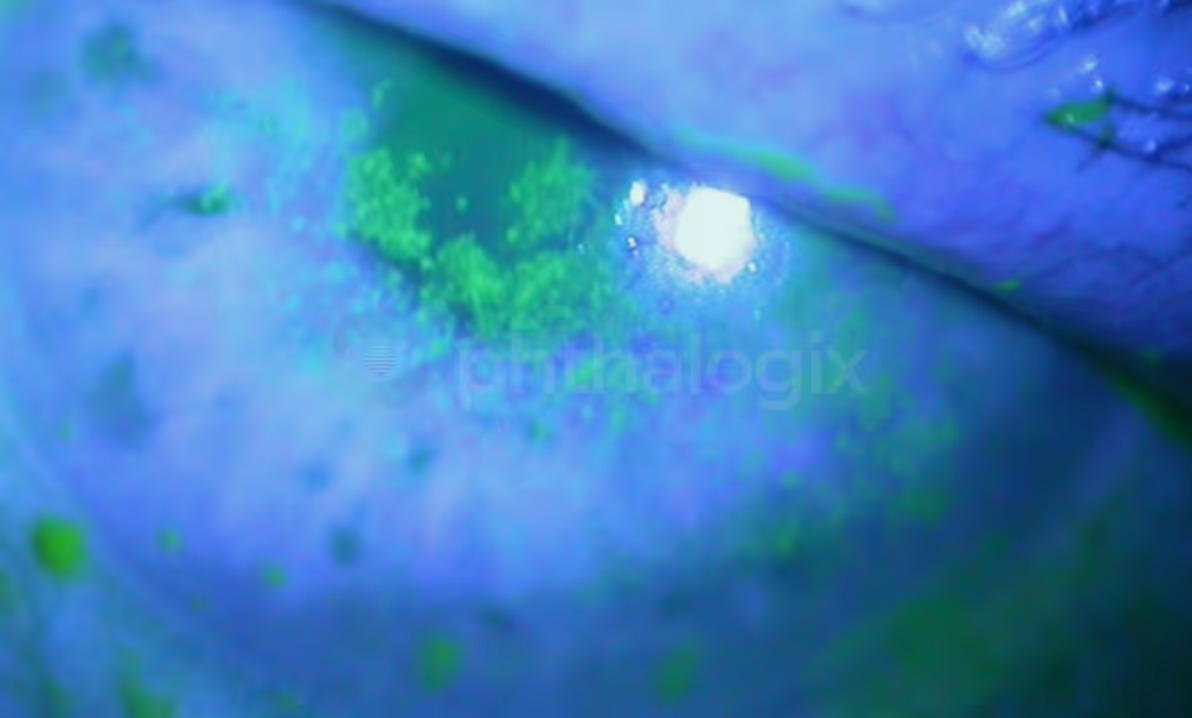
Pertinent Exam Findings: BCVA 20/30 OD, 20/40 OS. Lids OU: scalloped lid margins, telangiectasia, trace crusting, inspissated glands. Cornea OD: TBUT 4 seconds with 1-2+ diffuse SPK. Cornea OS: TBUT instant with 2-3+ diffuse SPK. Lens: PCIOL OU. Posterior segment: PVD OU, otherwise unremarkable.
Assessment/Plan: (1) Type 2 DM — no diabetic retinopathy or DME on exam today. (2) Superficial Punctate Keratitis OU — patient symptomatic and condition visually significant OS>OD. Patient has tried several drops in the past with little to no relief. Warrants treatment with AMT. OS treated today. Also recommended Preservative Free ATs BID-QID OU.
Billing note: 92014 billed with 65778 using the 25 modifier. Follow-up treatment for OD would be billed as 65778 only.
Before and 1 month after Tx OS: symptoms greatly improved, VA improved to 20/20.
This case demonstrates the effectiveness of amniotic membrane therapy in managing superficial punctate keratitis in a diabetic patient. Despite chronic symptoms and limited response to prior treatments, targeted AMT resulted in significant symptomatic relief and rapid improvement of the ocular surface. At follow-up, the patient achieved restored visual acuity to 20/20 and marked reduction in symptoms, highlighting the value of regenerative therapy in complex dry eye and comorbid conditions.